A founder has explained the same service on three sales calls this week. Each time, the prospect understands it only after the founder shares their screen and walks through a real example.
That is often the moment a business starts asking, what is marketing video production, and whether a video could do some of that explaining before the call.
Marketing video production is the work behind videos created for a business purpose. That purpose could be attracting attention, demonstrating a product, building trust, answering a common question, or moving a buyer toward the next step.
The video is not the goal by itself. The result is.
Start With the Question People Keep Asking
A business usually does not need “a video.”
It needs an answer to a communication problem.
Maybe customers do not understand the difference between two services. Maybe a product looks simple in photographs but has a useful feature people keep missing. Maybe the sales team spends the first ten minutes of every call explaining the same process.
Those are useful starting points for a marketing video strategy.
The team should decide what the viewer needs to understand before discussing animation styles, locations, cameras, or music. It also needs to define the target audience clearly.
A first-time visitor may need a basic introduction. A serious buyer may already understand the problem and want evidence. Treating both viewers the same usually creates a vague video that helps neither.
Give the Video One Proper Job
This sounds restrictive. It is not.
A focused video is easier to write, easier to produce, and easier to remember.
Problems begin when everyone adds one more request. The founder wants the origin story. Sales wants every feature. Marketing wants a campaign message. The product team wants a full walkthrough. Someone suggests adding customer quotes too.
The final script becomes a crowded company brochure.
An explainer video company can help narrow that material into one useful path. The video might introduce a common frustration, show how the service changes the situation, and finish with a sensible next action.
Everything else can become another video.
One clear message almost always beats six half-explained ones.
Buyers Ask Different Questions at Different Times
Not every viewer is ready for the same conversation.
Someone discovering the brand may be asking, “What does this company actually do?” A person comparing options is more likely to ask, “Why should I trust this one?” A buyer close to making a decision may want to know about setup, delivery, pricing, or support.
This is where the types of marketing videos for businesses begin to separate.
Short promotional videos can attract attention. Brand films can introduce a company’s point of view. Testimonials and case studies provide proof. Tutorials and product demo videos answer practical questions.
That is also how marketing videos support the sales funnel. Each video removes a different kind of doubt.
A single general video may still be useful, but it should not be expected to carry the entire buying journey.
Write for the Ear, Not the Company Brochure
Marketing scripts often sound fine until someone reads them aloud.
Then the problems become obvious.
The sentences are too long. The words sound formal. Claims such as “delivering exceptional solutions” appear without showing what those solutions are. Nobody speaks that way in a normal conversation.
A spoken script needs air.
It should use words the audience already understands. It should also replace broad claims with visible examples. Instead of saying a service saves time, show the task before and after. Instead of saying a product is easy to use, show someone completing the key action.
This is practical brand storytelling. It does not need a dramatic plot. It needs a change the viewer can follow.
A person has a problem. Something shifts. The result becomes clear.
The Unexciting Work Usually Saves the Project
Pre-production rarely gets much attention in a finished case study, but it protects the budget.
This stage covers the objective, script, structure, visual direction, storyboard, timing, voice, and final delivery formats. It is the foundation of the marketing video production process.
A rough storyboard can reveal that the product appears too late. A basic animatic may show that the voiceover is rushing through the most important point. These are good problems to discover early.
The alternative is finding them after animation, filming, or editing has already been completed.
A sensible video production process settles major decisions while they are still inexpensive to change. That does not remove creativity. It stops the creative team from solving a moving target.
Live Action Works When Reality Helps

Some messages are stronger when viewers can see real people and places.
A contractor may want to show the team arriving on site. A manufacturer may need to demonstrate equipment in a working environment. A consulting firm may benefit from showing the people clients will actually meet.
Live action is useful for interviews, customer stories, workplace content, physical demonstrations, event footage, and company profiles.
It also comes with practical limits. Locations need planning. People need to be available. Weather, noise, lighting, and reshoots can affect the schedule.
That does not make live action difficult by default. It simply means the format should be chosen because reality adds something valuable.
A real face can build trust. A real location can provide proof. If neither matters, another format may be easier.
2D Animation Can Show Situations That Are Hard to Film
Some business problems are familiar but not visually exciting.
A customer moves between several tools. An employee waits for approval. A family tries to understand a service. Filming these scenes may require actors, locations, props, and several setup changes.
A 2D explainer video company can build those situations without a physical shoot.
Characters can be simplified. Environments can change quickly. Abstract ideas can become visible through symbols and movement. The tone can also be adjusted to fit healthcare, finance, education, retail, or technology.
The mistake is assuming 2D must look childish.
Clean art direction, restrained movement, and good writing can make it feel professional. The style depends on the design choices, not the fact that it is drawn.
Product Videos Should Answer Questions, Not Pose for the Camera
A beautiful product shot has value. It just may not be enough.
Buyers usually want to know what the product does, how it works, what changes when they use it, and which details separate it from competing options.
Strong product demo videos deal with those questions directly.
A physical product may need close-ups and a real demonstration. Software may need interface animation. A device may need a mixture of live footage and diagrams. The right method depends on what a buyer cannot understand from photographs and text.
This is also where brands sometimes waste time on a long visual opening.
The viewer has come to see the product. Show it.
Mood can support the demonstration, but it should not delay the useful part.
Use 3D When the Inside Matters
A camera cannot always show what a product is doing.
Internal components may be hidden. A product may still be in development. A medical or industrial process may be unsafe, tiny, or impossible to film clearly.
A 3D explainer video company can create the object digitally, separate its parts, rotate it, show internal motion, or place it in an environment that does not yet exist.
That effort makes sense when depth carries information.
It makes less sense when the message is mainly about a service, a customer experience, or a simple benefit. Choosing 3D only because it looks more expensive can lead to a longer production without a clearer message.
The format should reveal something viewers need to see.
Otherwise, it is decoration.
A Brand Film Needs a Point of View
Many brand videos look polished and say very little.
There are office shots, smiling teams, slow camera movement, and a voiceover about quality or passion. The film could belong to almost any company.
Good video content marketing needs more personality than that.
A brand film might show how the company approaches a problem differently. It could follow the work behind a product, explain a decision the founders made, or focus on one customer situation that reflects the brand’s values.
This is how video can support brand awareness. People begin to recognize a tone, visual style, and way of thinking.
The video does not need to cover every service.
It needs to leave an impression that belongs to the company.
Social Video Is Not Just a Cropped Website Film
A website video often begins slowly because the visitor has already chosen to be on the page.
A person scrolling a feed has made no such commitment.
That changes the edit.
A social media video may need a faster opening, larger text, captions, tighter framing, and one very clear idea. It may also need to make sense without sound.
This does not mean every social post should flash and jump constantly. Fast does not have to mean chaotic.
It means the useful part cannot be buried.
A planned video marketing campaign may produce a main film, several short cutdowns, vertical versions, still frames, teaser clips, and loops from the same production. These assets are easier to create when they are considered before the final edit.
Distribution should influence production from the beginning.
SaaS Companies Often Show Far Too Much
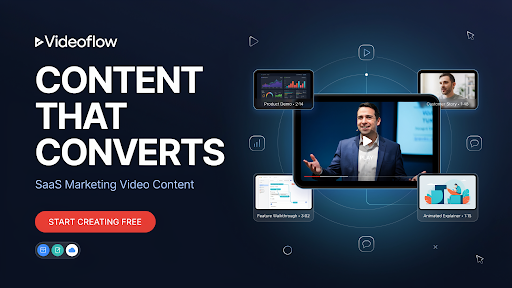
Software videos have a habit of turning into feature tours.
The cursor moves quickly. Menus open. Dashboard panels change. The voiceover names six features in twenty seconds. The viewer recognizes that the platform does a lot but remembers almost none of it.
A SaaS explainer video company will usually start somewhere else: the user’s problem.
What is frustrating today? Which task takes too long? What becomes easier after the platform is introduced?
The interface should appear only when it helps answer those questions. A homepage video may explain the broad value. A separate feature video can demonstrate one workflow. Onboarding content can handle the detailed steps.
Those videos serve different viewers.
Trying to combine them usually produces a rushed screen recording with a sales message attached.
Production Quality Is Not the Same as Visual Complexity
A video can be simple and still feel professional.
Clear audio matters. So does readable text, steady pacing, thoughtful framing, and editing that allows the main point to land. None of those things require excessive effects.
This matters when a team is learning how to create a marketing video.
Start by deciding what deserves attention. Spend the budget there.
A product film may need detailed lighting. A testimonial needs clean sound and a comfortable interview setting. An animated explainer may need stronger script development and design. A social series may benefit from a repeatable setup rather than one expensive shoot.
Production quality comes from judgment.
More elements do not automatically produce a better result.
The Ending Should Feel Like the Next Step
A video should not suddenly become aggressive in its final five seconds.
If the viewer has just discovered the company, “Buy now” may be too large a request. Visiting a service page or watching a product demonstration may be more reasonable.
A buyer who has already seen the demo may be ready to book a call. A retail customer may be ready to order.
The call to action should fit the viewer’s position.
Keep it to one main action. Asking people to buy, subscribe, follow, download, share, and contact the company at the same time creates unnecessary friction.
A useful ending feels like a continuation of the video, not a sales message pasted onto it.
Measure the Change the Video Was Supposed to Create
Views matter in some campaigns. They are not the only measure.
A product video may improve conversions on a landing page. A sales explainer may shorten calls. A tutorial may reduce support requests. A brand film may increase direct searches for the company.
The result should be measured against the original job.
Completion rate, click-throughs, inquiries, demo bookings, purchases, page behavior, and sales feedback can all provide useful signals.
This is part of why brands need marketing video production. Video can support several goals, but each video needs a defined purpose before those results can be judged properly.
Good measurement is not only about proving the video worked.
It helps the next one work better.
Final Words
So, what is marketing video production? It is the process of planning and producing video content that helps a specific audience understand a brand, product, service, or next step.
Brands need it because some ideas become clearer when people can see them in context. A good marketing video does not try to say everything. It solves one communication problem, uses a format that fits the message, and reaches viewers in a form suited to the platform.
The strongest video is not necessarily the most elaborate one.
It is the one that makes the right person understand what matters.
