
The email usually sounds simple:
“Can you send us a price for a one-minute explainer?”
Then the quotes arrive, and nothing feels simple anymore. One studio asks for $2,000. Another proposes $8,500. A premium team sends a figure above $25,000. All three appear to be quoting the same sixty seconds.
They are not.
The cost of an explainer video in 2026 is determined by what occurs prior to, during, and following the animation. A rudimentary AI-assisted video might cost less than $2,500. Custom studio projects typically cost between $3,000 and $15,000, although complex 3D work and luxury advertising can exceed $20,000 or even $50,000. Because production processes vary so dramatically, recent industry pricing guidelines reveal comparable large variances.
The running time gives you one clue. It does not explain the quote.
Start by Asking What the Video Has to Carry
Picture two companies requesting a 60-second video.
The first has an approved script, finished brand assets, and a straightforward message. It needs simple icons, text animation, a stock music track, and one voice. The video will appear at an internal meeting.
The second company is preparing a product launch. Nobody agrees on the message yet. The product is difficult to explain. The video needs custom characters, interface scenes, an original visual style, social cutdowns, and approval from six department heads.
Same runtime. Completely different job.
This is why explainer video pricing should never be compared through duration alone. A useful quote shows how much thinking, design, coordination, and finishing work sits behind the final file.
When a quote looks unusually low, check what has been removed. When it looks unusually high, ask what extra expertise or production depth has been added.
What a Low-Cost Video Actually Buys
There is nothing automatically wrong with a $1,000 explainer.
For an internal presentation, early product test, or temporary campaign, a template may be enough. The provider can use existing scenes, standard transitions, stock icons, and an AI or entry-level voice.
The limits usually appear when the company wants something more specific.
The character may not match the audience. The illustrations may feel familiar because other businesses use the same asset library. There may be little help with the script. Changes beyond one revision could cost extra.
Current 2026 guides place AI-assisted and template production anywhere from a few hundred dollars to roughly $2,500, although some agencies sell more developed AI-supported packages at higher prices.
That tier works when the risk is low.
It becomes harder to justify when the video will sit on the homepage, support paid advertising, introduce the company to investors, or explain a product that customers already find confusing.
Where the Midrange Budget Goes
Now consider a custom project priced at $6,000 or $8,000.
An animated explainer video company may begin with interviews rather than animation. The producer wants to know where prospects lose interest, which benefit matters most, and what viewers should do after watching.
A writer develops the message. A storyboard artist maps the scenes. Designers create a visual direction that belongs to the brand. Voice talent records the script. Animators build the movement, and a sound designer finishes the piece.
This is where the animated explainer video price starts to make more sense. You are paying for a connected process rather than a collection of moving assets.
Mid-market studios commonly quote roughly $3,000 to $15,000 for custom 60-to-90-second work, with many SaaS and B2B projects landing between $4,000 and $10,000.
The team is not only producing the video.
It is helping decide what the video should say.
Sixty Seconds Is Not a Unit of Difficulty
“How much does a 60 second explainer video cost?” is a reasonable question. It just needs more context.
One minute of icons sliding between scenes may be fairly quick to produce. One minute featuring custom characters, five locations, detailed acting, and several camera angles takes much longer.
The same issue appears in 3D. A clean product rotation and a realistic liquid simulation may both last ten seconds, yet the simulation requires far more setup, testing, rendering, and correction.
Video length affects the budget, but scene count and visual complexity often matter more.
A tighter script can even require more strategic work. Turning a complicated offer into 130 clear words is not always easier than writing a longer explanation. The team must decide what to leave out without damaging the message.
That decision is part of the production.
The Script Is Not a Minor Line Item
Businesses sometimes provide a rough paragraph and assume the studio will “clean it up.”
That can work, but writing for video is not the same as editing website copy.
A spoken script needs a natural pace. It must leave time for the viewer to understand the visuals. Each sentence should give the screen something useful to show.
Good scriptwriting and storyboarding also expose problems before they become expensive.
Suppose the storyboard reveals that the product does not appear until the forty-second mark. That can be fixed in an afternoon. Discovering the same issue after the scenes are fully animated may mean rebuilding half the video.
Planning is not administrative overhead.
It protects the video production budget.
What Custom 2D Work Costs
2D animation covers an enormous range.
At one end, the video may use text, icons, basic shapes, and simple transitions. At the other, it may include designed characters, several environments, expressive movement, perspective changes, and frame-by-frame details.
A 2D explainer video company may quote somewhere between $3,000 and $15,000 for a custom project, depending on the level of illustration and animation involved. Agency pricing can go higher when the scope includes broader campaign strategy or unusually detailed character work.
The 2D animation cost rises when each scene needs to be drawn from scratch.
Movement matters too. A character who stands beside a chart requires less work than one who walks, turns, speaks, picks up an object, and reacts to another character.
This is why the cost of a custom animated explainer video cannot be estimated from a style label alone. “2D animation” tells the studio what general medium you prefer. It does not explain how much needs to happen.
Professional Audio Changes the Result More Than Buyers Expect
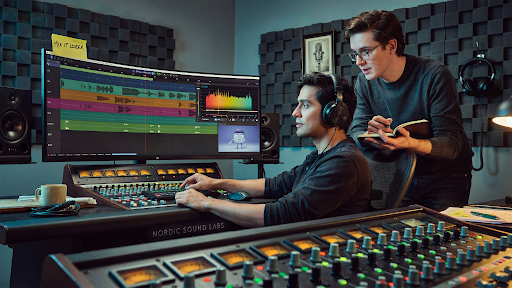
A rough voice can make strong animation feel unfinished.
A professional voiceover gives the production a consistent pace and tone, but the fee varies. The language, talent experience, intended audience, usage period, and geographic reach can all affect the rate.
A national advertising campaign carries different licensing expectations from an internal training video.
Then there is sound design.
Small sounds make movement feel physical. A button click confirms an action. A soft mechanical sound gives weight to a product assembly. Music controls pace, but the license needs to cover the places where the video will appear.
Ask what the quote includes.
“Audio included” could mean a stock track and synthetic narration. It could also mean casting, recording direction, licensed music, sound effects, mixing, and final mastering.
Those are not the same package.
Why 3D Can Raise the Quote Quickly
A 3D object must exist before it can be animated.
The team may need to construct or clean the model, generate textures, define materials, configure controllers, apply lighting, arrange cameras, and render the final scenes. Products having reflecting surfaces, flexible components, liquids, smoke, or complicated mechanics need further testing.
A 3D explainer video company may charge between $15,000 and $50,000 or more for thorough agency work. Simpler freelancing jobs are less expensive, but cinematic medical, industrial, and product videos may cost more.
The 3D animation cost becomes worthwhile when depth explains something important.
Perhaps buyers need to see how an internal component moves. Maybe the product has not been manufactured yet. A medical device might need to be shown inside the body, or an industrial process may be unsafe to film.
The 2D vs 3D explainer video cost comparison should start there.
If the message depends on human situations, software workflows, or abstract ideas, 2D may communicate it more clearly. If shape and internal movement matter, 3D can justify the extra investment.
SaaS Videos Have Their Own Production Problems
Software looks easy to capture because it already exists on a screen.
Raw screen recordings often prove otherwise.
Small buttons become unreadable on mobile. Real accounts contain private data. The interface may change while the video is in production. A cursor moving through every menu can quickly become tiring.
A SaaS explainer video company may redraw or simplify the interface so the viewer knows where to look. It may combine UI animation with characters, diagrams, and motion graphics rather than showing the dashboard from beginning to end.
Custom SaaS explainers are typically priced in the center of the professional market, ranging between $4,000 and $10,000 for a concentrated 60- to 90-second production. Premium launches and bigger delivery bundles may cost extra.
The cost increases when the company requests several connected pieces: a homepage explainer, feature demonstrations, onboarding clips, paid ads, and vertical social edits.
Reusing the design system helps. Each new video still requires its own script, timing, and review.
Revisions Are Where Budgets Wander
A quote that includes “two revision rounds” needs a closer look.
Does that mean two script reviews? Two reviews at every stage? Two opportunities to request any change at all?
The timing of the feedback matters more than the number.
Changing a sentence before recording may take minutes. Changing it after animation could affect the voiceover, scene length, captions, music, and final edit.
The same applies to design. Adjusting a shirt color is small. Replacing the character after six scenes have been animated is not.
Clear revision rounds keep the project moving. They also require the client to gather feedback before sending it.
The most expensive workflow is scattered approval. Marketing approves the script, product rewrites it later, and leadership changes the central idea after animation has started.
That is not a revision. It is a restart.
Before Accepting a Quote, Read the Missing Parts

Some charges never appear until the project is nearly finished.
Common examples include additional aspect ratios, source files, rush delivery, premium music, voiceover pickups, foreign-language versions, captions, and extra revisions.
Ask whether the final package includes:
A horizontal master
Vertical and square versions
Caption files
A clean version without text
Commercial usage rights
Editable source files
Music licensing
Social cutdowns
Translation support
The list does not need to be long if you do not need those items.
It does need to be clear.
A $5,000 quote that includes the full delivery package may be better value than a $4,000 quote that charges separately for every useful version.
How to Budget Without Guessing
The best answer to how to budget for an explainer video begins with the role of the finished asset.
Will it support sales for three years? Is it being shown during a product launch? Will paid traffic be sent to it? Does the sales team plan to use it in every presentation?
A high-value asset deserves stronger writing, original design, and enough review time to get the message right.
A temporary internal clip does not need the same treatment.
Next, decide what the production must include. Write down the style, approximate length, number of formats, deadline, languages, review team, and where the video will run.
Then compare scopes, not totals.
These are the things that influence explainer video price in a way that customers can control. A clear brief will not reduce the cost of professional manufacturing, but it will make the estimates much more understandable.
Final Words
The average explainer video cost in 2026 ranges from a few hundred dollars for basic AI-supported material to more than $50,000 for premium bespoke 3D and enterprise production.
A reasonable working budget for a professionally created 60-to-90-second unique explanation ranges from $3,000 to $15,000. Detailed 3D, larger campaign work, complex characters, and challenging technical themes can raise the price significantly.
Do not judge a quote by the final runtime.
Examine the screenplay, images’ originality, scene count, animation detail, audio, approval procedure, usage rights, and included formats. These factors explain why two one-minute recordings might command vastly different rates.
The right budget is the amount needed to solve the communication problem without paying for production work the audience will never need.
