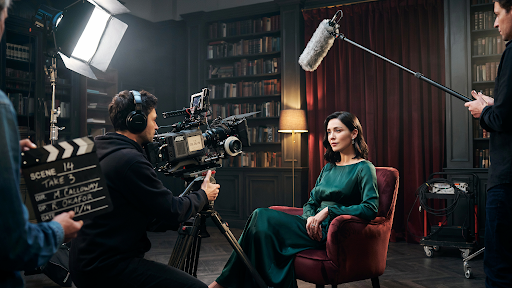
Entertainment video production is not about making people admire the camera work. It is about making them stay.
That is harder than it sounds.
Most viewers are not sitting there hoping to be amazed. They are half-watching, scrolling, muting, skipping, checking comments, or determining if the video is worth another two seconds. Even a slick video might be lost in the shuffle if it appears boring, formulaic, or too much like a business attempting to sound significant.
The videos that hold attention usually do something simple early. They make the viewer curious. They create a feeling. They show a person, problem, world, or moment that does not feel dead on arrival.
That is the real game.
Start Where the Viewer Is Already Restless
A lot of entertainment videos open like they have all the time in the world.
Logo. Music swell. Pretty shot. Another pretty shot. Then maybe, after ten seconds, something begins.
Online, ten seconds can be a lifetime.
If the viewer is on a phone, the video needs a pulse almost immediately. That does not mean every opening has to be loud. A quiet opening can work if it has tension. A strange image can work. A funny line can work. A character caught in the middle of a bad decision can work.
What does not work is asking the viewer to wait before the video gives them anything.
This is where how entertainment video production captivates audiences becomes less about theory and more about editing choices. The first shot should carry weight. The first line should not feel wasted. The first few seconds should tell the viewer, “There is something here.”
A Story Does Not Have to Be Big
People sometimes hear “story” and think it means drama, plot twists, and cinematic emotion.
Not always.
A story can be tiny.
Someone tries to do something and gets stuck. A creator prepares for a performance. A product changes one annoying part of someone’s day. A character makes a mistake and has to fix it. A viewer sees a before-and-after moment that feels familiar.
That is video storytelling in a practical sense.
This is also why storytelling matters in video production. Without a story shape, a video can turn into a set of nice shots with no reason to keep watching. Story gives the edit a spine. It gives the viewer something to follow.
An explainer video company can help when a brand knows the message but does not yet have a watchable structure. Many businesses can explain what they do. Fewer can turn that into a sequence people actually want to finish.
The story does not need to be dramatic. It needs movement.
Feeling Beats Information
Viewers forget details fast.
They remember how a video made them feel.
A laugh. A small shock. A satisfying reveal. A moment that feels familiar. A bit of tension. A sense of warmth. Even a simple “I know that problem” reaction can be enough.
That emotional connection is what separates watchable content from moving information.
A brand can list features all day. A creator can explain the idea perfectly. A studio can make the visuals sharp. But if the viewer feels nothing, the video usually fades.
The mistake is forcing the feeling. Heavy music does not automatically create emotion. Slow motion does not make something meaningful. A dramatic voiceover can actually make a simple idea feel fake.
The emotion should come from the situation.
Show the parent finally getting a quiet moment. Show the gamer discovering a strange world. Show the founder realizing the old process is breaking. Show the audience a small truth they already know but have not seen framed that way.
That is enough.
Style Should Carry the Idea, Not Fight It
Visuals matter. Of course they do.
But style chosen for its own sake can damage the video.
A fast comedy piece should not feel like a slow luxury film. A brand documentary should not cut like a gaming trailer. A children’s video should not move like a corporate presentation. Viewers may not explain the problem that way, but they feel when the style is wrong.
That is where visual storytelling matters.
Color, pacing, sound, movement, lighting, framing, animation, and transitions all tell the viewer what kind of world they are entering. These choices should make the idea easier to feel.
A 3D explainer video company can be useful when the project needs depth, product detail, or a stronger sense of world-building. Entertainment tech, gaming promos, virtual events, product reveals, and immersive campaign videos can benefit from 3D when the space itself matters.
But not every idea needs 3D. Some stories need the warmth of 2D. Some need live action because a real face builds trust. Some only need tight motion graphics and a strong edit.
The best style is not the biggest style. It is the one that makes the idea land.
Platform Behavior Changes the Cut
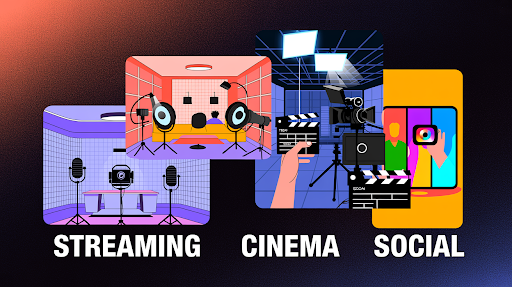
A video does not exist in one perfect viewing room.
It lives on TikTok, YouTube, Instagram, websites, landing pages, streaming platforms, event screens, and paid ads. Each place changes how the viewer behaves.
That is why entertainment video production for modern audiences has to think about platform use before production starts.
For social media videos, clarity has to come fast. The frame should make sense on mobile. Captions may matter because many viewers watch with sound off. The hook cannot be buried under a slow intro.
A YouTube video can take more time if the subject earns it. A website video should help the visitor understand something without getting in the way. A campaign film can breathe if the story is strong enough.
This is where content strategy protects the creative work. If the team knows where the video will live, the script, format, edit, and visuals can be built for that space from the start.
Cutting one long video into five short ones later often feels exactly like what it is: an afterthought.
Short Videos Need a Sharper Idea
A short-form video is not easy just because it is short.
It has less space to hide weak thinking.
One short video should usually carry one idea. One joke. One reveal. One product moment. One emotional beat. One reason to share. The more ideas packed in, the less the viewer remembers.
That is how to create engaging entertainment videos for fast platforms. Do not try to tell the whole brand story in twenty seconds. Give people one moment that feels worth finishing.
The rhythm matters too.
Too slow, and viewers leave. Too fast, and nothing has time to land. Good short-form work has speed, but it still lets the important moment breathe.
That balance is easy to underestimate.
Animation Makes the Impossible Feel Normal
Live action is powerful, but it has limits.
Animation can ignore some of those limits.
A character can fall through a phone screen. A product can rebuild itself in midair. A boring workflow can turn into a race. A tiny object can become a whole world. A mascot can carry a campaign across videos, ads, and social posts.
A 2D explainer video company can be helpful when the video needs warmth, humor, characters, or a lighter tone. 2D works well for children’s content, educational entertainment, app stories, service brands, social campaigns, and character-led brand content.
Animation gives creative control. No location issues. No weather problems. No actor schedule. No physical set that has to be rebuilt.
Still, more movement is not always better. An animated video can become exhausting when everything bounces, flashes, and spins. The best animated entertainment knows when to stop moving for a second.
That pause can make the next moment stronger.
Branded Entertainment Should Not Punish the Viewer
Nobody likes feeling tricked into watching an ad.
That is the danger with branded entertainment. If the video pretends to entertain but keeps pushing the product every few seconds, viewers notice.
The better approach is to give something first.
A funny character. A relatable situation. A useful idea. A visual surprise. A short story. A moment people want to send to someone else.
The brand should still be present. It should not disappear. But it should not choke the video.
A snack brand might build a recurring comic setup. A fitness brand might create challenge videos. A tech company might make content around everyday digital frustration. An education brand might make learning feel less dry through story.
A SaaS explainer video company has to be careful with this. SaaS videos often become feature-heavy too quickly. A more entertaining approach can make the software easier to understand without turning the video into a dry product tour.
The viewer should know who made it. They should not regret giving it their time.
Production Quality Is Mostly Judgment
Good production quality is not always about the biggest budget.
It is about making the right choices.
Clear sound. Clean pacing. Framing that makes sense. Animation that supports the idea. Music that helps but does not beg for emotion. An ending that feels planned, not attached at the last minute.
A phone-shot video can work if the concept is sharp and the edit feels alive. A high-budget video can fail if the idea is empty.
That is especially true for entertainment video content for social media. Viewers will accept simplicity. They will not accept boredom for long.
The question is not always, “How expensive does this look?”
Sometimes the better question is, “Does every choice help the viewer stay with it?”
Participation Can Turn a Video Into a Conversation
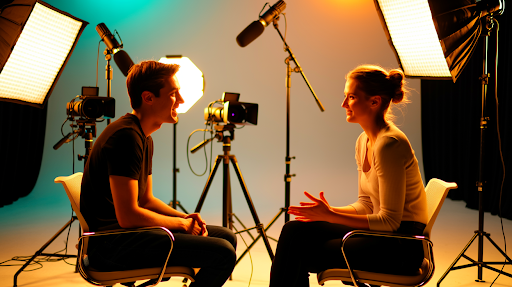
Viewers do not only watch now.
They comment, remix, stitch, duet, vote, share, argue, copy, and turn moments into their own content. A video can travel further when it gives the audience something to do with it.
That is where interactive video content can help.
A creator might ask viewers to choose what happens next. A campaign might use polls. A brand might invite user submissions. A live video might let comments guide the next move.
This can improve audience engagement because people remember what they participate in.
Not every video needs interaction. Some stories work better when viewers simply watch. But if participation is part of the goal, it should be built into the idea early.
Added late, it usually feels like a gimmick.
The Better Planning Question
Before a camera rolls or a storyboard starts, ask this:
What should the viewer feel, remember, or do after watching?
That one question can save the whole project from becoming scattered.
If the goal is awareness, make the video memorable. If the goal is engagement, give people something to react to. If the goal is trust, show something honest. If the goal is conversion, make the next step clear without killing the entertainment.
Weak videos often try to do everything at once.
Brand film. Product demo. Social ad. Testimonial. Comedy sketch. Campaign teaser.
That is too much for one piece of content.
One video should have one main reason to exist. Keep that reason visible from the first frame to the final cut.
Final Words
Modern viewers are captivated by entertainment video production when it provides them with a compelling cause to continue watching. A compelling introduction, a clear tale, emotional appeal, clever visual choices, platform knowledge, and sound production judgment are all important. The video may be animated, live-action, branded, interactive, short-form, serious, hilarious, or cinematic.
The presentation is less important than the content. The primary question is if the spectator remains, feels something, recalls the concept, or wishes to respond after seeing.
