Explainer video production cost is one of those things that looks easier from a distance. A one-minute animated video sounds small. A script. A few scenes. A voiceover. Some music. Done.
Then Monday comes.
The marketing team writes the first draft. Product says the feature list is too light. Sales says the buyer pain is wrong. The designer asks for examples. The founder says it should feel “more premium,” which is usually where everyone stops breathing for a second because nobody knows what that means.
By the end of the week, the video still has no approved script.
That is the real cost conversation. Not just in-house vs outsourced. Not just “cheap” vs “expensive.” The question is whether your team can get the right video finished without burning three weeks of focus.
The Number on the Quote Is Not the Whole Price
Most companies start with the same question: how much does an explainer video cost?
Fair question. Slightly annoying answer.
It depends.
A clean 2D video with icons and light motion can be fairly controlled. A custom animated explainer with original scenes, character work, voiceover, sound, and a few proper revision rounds will cost more. A technical 3D product video can jump quickly because the work is heavier before animation even begins.
That is why explainer video pricing feels inconsistent.
Two videos can both be 60 seconds. One is a simple screen-led explainer for a SaaS dashboard. The other needs product modeling, internal mechanics, custom transitions, and different versions for a website, paid ads, and a sales deck.
Same runtime. Completely different workload.
In-house Feels Cheaper Because the Bill Is Hidden
In-house sounds sensible at first.
You already have a designer. Someone in marketing can write. Product knows the tool. The brand files are already there. Why pay an outside team?
Sometimes that logic works.
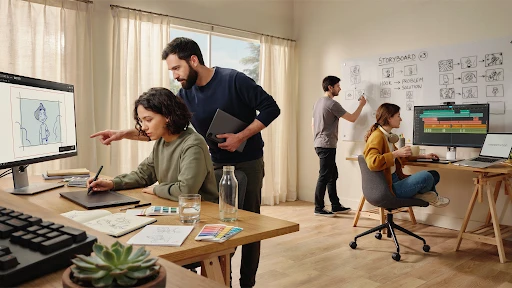
But the cost of making explainer videos in-house includes the hours nobody tracks properly. The writer spends two days fixing the script. The designer builds scenes between campaign tasks. Product leaves comments in three different documents. Someone hunts for a voiceover. Someone edits. Someone exports. Someone asks for “one small change” after the final file is already done.
That is in-house video production in a lot of companies.
Not a disaster. Just slower than expected.
If your team already makes video every week, fine. If they are squeezing it between product launches, blogs, ads, landing pages, sales decks, and internal requests, the “cheap” route may not be cheap. It may just be paid in attention instead of cash.
When You Should Keep It In-house
Some videos do not need a studio.
A quick support clip.
A basic screen recording.
A product update.
A short onboarding tip.
A simple internal training piece.
Those should often stay with the internal team, especially if the brand already has a visual format.
This is where explainer video services can still help without taking over every small asset. An outside team can create the first strong template: script tone, scene style, icon rules, motion patterns, caption style, intro card, outro card, export sizes. Then your internal team can make smaller follow-up videos without reinventing the wheel every time.
That hybrid setup is usually more realistic than pretending every video belongs in-house or every video needs outsourcing.
The Script Is Where Budgets Start Bleeding
Animation usually gets blamed for cost.
The script is often the real problem.
If the message is unclear, everything after it becomes harder. The storyboard changes. The voiceover changes. The scenes change. The timeline slips. People start reviewing the video as if they are seeing the idea for the first time, because they are.
A weak script can quietly wreck a video production budget.
The usual signs are easy to spot. The video has three audiences. The problem is vague. Every department gets a line. The CTA is soft. The opening explains the company instead of the customer’s issue.
Fix the message early and you save money later.
One audience. One problem. One promise. One next step.
Boring advice, but it works.
What Outsourcing Actually Pays For
Outsourced video production costs more upfront because the invoice is right there. Everyone can point at it.
But the invoice is not just for animation.
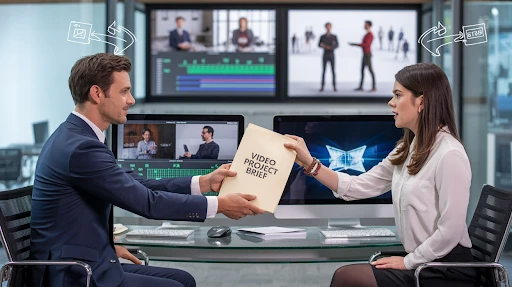
A proper outside team handles the brief, script, storyboard, design direction, voiceover, animation, sound, captions, revisions, file versions, and project flow. More important, they should keep the video from becoming a dumping ground for every feature the company wants to mention.
A good explainer video agency asks blunt questions.
Who is this for?
Where will it be used?
What does the viewer need to understand?
What can we cut?
What action should happen after watching?
Internal teams often skip those questions because everyone is trying to keep the peace. Outside teams are paid to make the video work, not to protect everyone’s favorite sentence.
2D Keeps the Budget Easier to Control
2D animation cost is usually easier to manage because the style can stretch or shrink.
A simple icon-led explainer can stay lean. A character-based video costs more. A full custom illustrated style with lots of scenes, transitions, and brand-specific artwork costs more again.
A 2D explainer video company is often a good fit for SaaS, fintech, healthcare, service businesses, customer education, onboarding, and training videos.
The best part is reuse.
Once the characters, icons, colors, UI frames, and motion rules are built, future videos do not always start from zero. A company planning a series can save time that way. Not free, of course. But faster and easier than rebuilding the look every month.
3D Is Worth It Only When It Explains Better
3D animation cost rises for a reason.
Models have to be built. Surfaces need texture. Lighting has to be set. Camera movement needs planning. Rendering takes time. If the product has internal parts or technical details, accuracy matters. One wrong detail can make the whole thing feel careless.
A 3D explainer video company makes sense when the viewer needs to understand shape, space, mechanics, assembly, depth, or internal movement.
Medical devices. Industrial equipment. Hardware. Architecture. Machines. Technical products.
That kind of work often needs 3D.
But 3D is not a badge of quality. If the video explains a basic app workflow, 3D may just make the bill bigger. Use it when it makes the message clearer. Skip it when it only makes the video look expensive.
SaaS Videos Get Bloated Fast
SaaS explainers have a special problem: everyone thinks their feature belongs in the video.
Marketing wants the big promise. Product wants workflows. Sales wants objections. Customer success wants onboarding. Leadership wants vision. Someone wants the new dashboard included because it took six months to build.
Now the video is not an explainer. It is a crowded tour.
A SaaS explainer video company should stop that early. A homepage explainer is not a feature tutorial. A feature tutorial is not an onboarding video. A sales follow-up video is not a renewal video.
For SaaS, the smarter spend is often one main explainer plus smaller support videos. One for onboarding. One for the strongest feature. One for customer education. One for sales.
Trying to force all of that into one master video usually creates something nobody wants to watch twice.
Final Words
Explainer video production cost is not only about the visible invoice. In-house production can save money when your team has the skill, time, and process to make simple videos often. Outsourcing costs more upfront, but it can save time and protect quality when the video needs to explain a complex product, support sales, improve onboarding, or carry a launch.
The smartest setup is usually mixed. Use in-house for speed and repeat work. Use outside production when the video has to do heavier business work.
