
The history of animation did not begin with famous mascots, giant studios, or glossy digital movies. It started in a much stranger place. People were trying to make still images move. That was the puzzle. Not branding. Not box office. Just motion.
If one drawing followed another, and another, and another, could the eye be fooled into seeing life where there was none? That question dragged the medium forward for years. So when people talk about animation as if it arrived fully formed, they skip the messy part. And the messy part is half the story.
A lot of early animation history feels less like an industry and more like a string of visual experiments that somehow kept getting better.
It Started With Tricks Before It Became Storytelling
Before animation became what we think of now, it was mostly illusion.
People built devices to fake movement long before modern film was doing much of anything useful. The magic lantern, the zoetrope, the phenakistiscope, the praxinoscope. None of these looked like the finished thing, but that is not the point.
What mattered was what they proved. You could take separate images, show them in sequence, and get the eye to believe something was moving.
That was the real beginning of early animation.
At that stage, nobody was trying to build layered emotional stories. It was not that polished yet. The goal was much simpler than that. Make a figure shift. Make an object bounce. Make a face change. Make an audience react. That alone was enough to keep people experimenting.
And honestly, that is usually how new mediums start. First, as a novelty. Then, as a craft. Then, much later, as something bigger.
So Who Created Animation?
This is where people usually want one clean answer and get disappointed.
If you ask who created animation, the truth is that no one person gets the whole credit. Too many people were involved too early, and each of them moved the medium forward in a different way. Animation did not appear on one specific day when somebody unlocked the full formula. It grew in pieces.
Still, one name keeps coming back, and fairly so: Émile Cohl.
His 1908 film Fantasmagorie is one of the names that always shows up when people talk about where modern animation really began to take form. Watch it now, and it still feels loose, odd, and unexpectedly alive. That matters. It does not move like a machine. It moves like somebody was thinking through the page.
That is why Cohl still gets mentioned among the pioneers of animation. Not because he did everything first, but because he pushed the form somewhere meaningful.
Why Fantasmagorie Still Gets Talked About
Some old work survives only because it came first. This one survives because it still feels imaginative.
It had a unique animation style that kept slipping from one image to the next, almost like the drawing was dreaming out loud. One shape became another. One moment melted into the next. It was not polished in the later studio sense, but that looseness is part of what made it memorable.
The process behind it mattered too. The next drawings in the animation were traced from the ones before them, which helped create continuity between frames. That sounds small when you say it quickly, but it was not small. That kind of repetition and adjustment is where animation started becoming a real process rather than a visual stunt.
That is why this part of the history of animation matters. You can see the medium learning how to flow instead of just flickering.
Then Came Winsor McCay, and Things Got More Alive
If Cohl showed what drawn movement could become, Winsor McCay helped show what an animated character could feel like.
That is why Gertie the Dinosaur still matters.
Gertie did not just move because movement was possible. She reacted. She hesitated. She seemed to have a mood. That is a big jump. Once animation starts feeling like performance instead of demonstration, the whole medium changes.
McCay also helped combine animation and live action in ways that feel surprisingly bold when you look back at the time he was working in. That instinct never really went away. Animation kept brushing up against filmed performance over the decades, then later mixed with effects, digital compositing, and all kinds of hybrid formats.
You can still feel the echo of that now. A modern explainer video production company might be working with completely different tools, but the instinct is familiar. Use whatever visual method helps the message land.
Animation Was Handmade in the Hardest Possible Way
This is the part modern audiences usually underestimate.
A lot of the older work was punishingly manual. One frame, then the next, then the next. It is easy to say that now as a sentence. It is harder to sit with what it means as labor. Hours and hours of drawing for seconds of motion. Tiny adjustments. Repetition. Planning. Corrections. More planning.
That is one reason people still talk about the artistry of traditional animation with a kind of respect that sounds almost protective. It was not only beautiful. It was demanding in a way that digital work rarely is now.
And because it was so demanding, the work could not stay purely individual forever. Scale was going to force structure.
The Animation Industry Had to Become a System
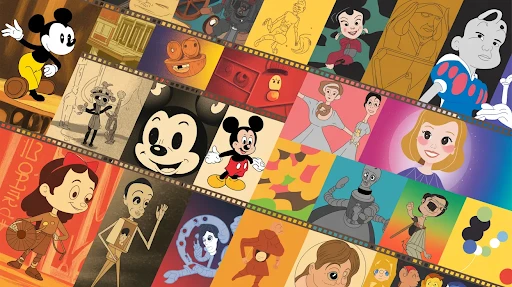
Once studios wanted bigger projects, the medium had to stop behaving like a solo endurance test.
That is where the animation industry starts looking more like an industry and less like a cluster of brilliant overworked artists trying to survive frame by frame. Work had to be divided. Roles had to become clearer. People focused on layout, inking, timing, painting, camera work, and different stages of movement, rather than one person carrying everything.
That shift changed what was possible.
It also laid the groundwork for the longer production pipelines across the animation industry that later grew into digital systems. The software would come much later. The need for process showed up much earlier.
That is one of the quiet truths in the story. Art got bigger by becoming more organized.
Disney Changed the Scale of the Whole Thing
It is hard to stay away from Disney in a blog about the history of animation, because this is the point where the medium stopped feeling small.
Before that, animation had already proved it could be clever, entertaining, and visually inventive. Disney helped push it into something larger and more emotionally ambitious. Snow White and the Seven Dwarfs mattered not just because it existed, but because it made feature-length animation feel commercially and creatively serious.
That changed expectations for everybody.
This was a huge era of animation because the medium was no longer being judged only as a novelty or a short-form attraction. Audiences now expect character, atmosphere, emotion, and visual depth at a much bigger scale.
And from there, the pressure only increased. Animation had to do more than move. It had to hold.
Then CGI Opened Another Road
The shift into CGI to animation workflows changed the visual language in a very obvious way. Space looked different. Camera movement felt different. Lighting, texture, and depth all started behaving in ways that hand-drawn work handled very differently.
That mattered. A lot.
But it is worth saying clearly that CGI did not make the earlier path irrelevant. It opened another one. That is really the better way to read it. Animation gained a new road instead of abandoning the map.
You can still see the impact everywhere now. A 3D explainer video company depends on the possibilities that came out of that shift, especially when dealing with dimensional products, technical motion, spatial views, or rendered environments. But even there, the work still relies on clear movement and readable storytelling.
New tools. Same pressure to make the viewer follow the idea.
Why This Still Matters Now
This is not only history-for-the-sake-of-history.
It explains why animation is so flexible now. It also explains why it keeps turning up in places that have nothing to do with old theatrical shorts. Product demos. education. onboarding. brand storytelling. software walkthroughs. Digital marketing campaign videos. It all makes more sense when you realize the medium never stayed still for long.
And that is probably the most useful thing the history of animation tells us. The form stayed alive because it kept changing without losing the basics underneath.
Even a SaaS explainer video company working on a modern product today is still using the same broad promise that pulled the medium forward in the first place. Make motion carry meaning. Make the viewer understand faster. Make the still image stop feeling still.
CGI Changed More Than the Look
A lot of people reduce this era to visual realism. That is only part of it.
The move into CGI to animation workflows also changed how teams worked. Different departments grew in importance. New technical roles appeared. Rendering became a major part of production.
Camera movement and lighting behaved differently. Characters were no longer drawn frame by frame in the old sense. They were built, rigged, posed, and animated inside a different system.
That changed the pacing of production.
It also changed the structure of collaboration. Bigger digital films depended on larger and more specialized pipelines. That is where the old studio logic evolved into even more complex production pipelines across the animation industry. The work still needed artists, obviously. It just needed them in a different arrangement.
And the funny thing is, even with all that change, the basic pressure stayed the same. The audience still had to believe the movement. The image still had to hold attention. The story still had to carry the weight.
Modern 2D Came Back With a Different Confidence
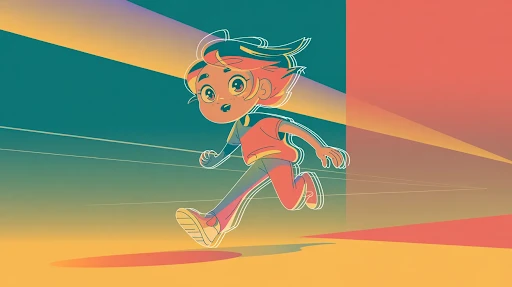
For a while, it felt like computer-generated 3D was the future and everything else would slowly become niche.
That never fully happened.
Modern 2D came back hard, but not in a nostalgic way. It came back sharper, bolder, and more self-aware. Some of it kept the spirit of hand-drawn work. Some of it used digital tools to imitate older energy while moving much faster in production. Some of it mixed flatter illustration with richer depth cues and more stylized motion.
That return matters because it reminded the animation industry of something important. Audiences do not only respond to realism. They respond to style. They respond to intention. They respond to images that feel like somebody made a choice.
That is one reason a modern 2D explainer video company can still do such strong work in a market full of digital options. Flat does not mean outdated. If the design is smart and the motion is right, 2D can still feel more distinctive than a lot of polished 3D.
Hybrid Workflows Became More Interesting Than the Old Arguments
For years, people liked turning animation into a debate.
2D or 3D. Hand-drawn or digital. Traditional or modern. That kind of thing.
Real projects do not always care about those categories as much as people talking about them do.
A lot of current work lives in the overlap. Some films use digital tools to mimic the looseness of drawn work. Some commercials blend flat design with dimensional lighting. Some projects bring live action into the frame. Some move between graphic systems on purpose. That is where the more interesting stuff often happens now.
This is why mixed media animation examples have become such a useful point of reference. They show that modern animation does not have to obey one visual rule from start to finish. It can shift. It can borrow. It can mix techniques without feeling confused, as long as the choices make sense together.
That flexibility is part of the reason animation stays so adaptable across industries.
Frequently Asked Questions
Final Words
The history of animation is really a story about restlessness. The medium never sat still for long. It moved from optical tricks to drawn films, from hand-made labor to studio systems, from paper workflows to digital production, from theatrical storytelling to branded and everyday communication. Every phase added something.
Nothing arrived fully finished. That is what makes history so interesting. Animation kept changing because people kept finding new ways to make motion mean more. And that is still true now.
Related Articles: