
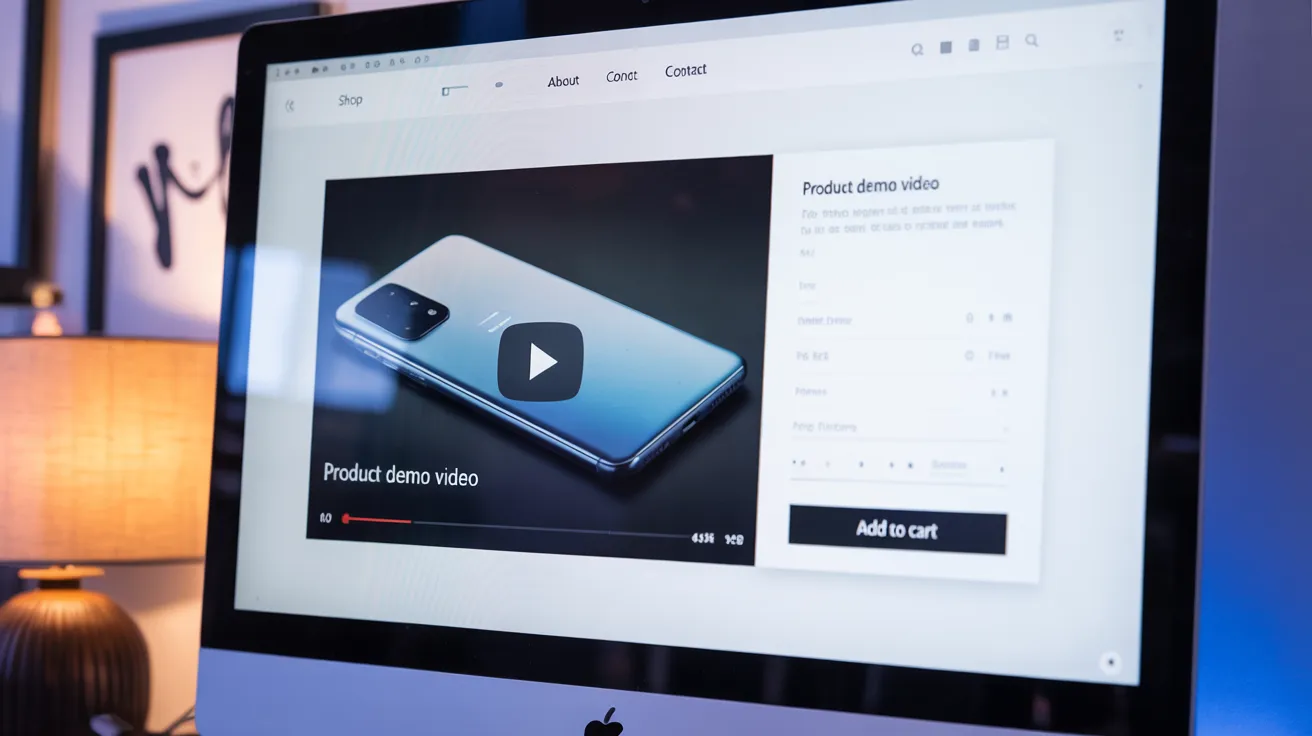
A strong product page video does something photos rarely manage on their own. It answers the shopper’s quiet question before they leave the page: “Can I picture this in real life?” That matters because product pages carry a huge amount of the buying decision.
Baymard’s research shows nearly all users go through a product page before making a purchase, and that page is often where they decide whether to move forward or walk away. Shopify also points out that video helps show exactly what customers can expect from a product.
Photos still matter. Good ones absolutely matter. But photos freeze the product. The video explains it.
That is the difference.
A clean image can show shape, color, and styling. A video can show size, use, movement, texture, setup, scale, and timing. It can answer the things people are still unsure about after they scroll through the gallery.
For online shopping, that gap matters because customers cannot touch the product, test it, or ask a salesperson a quick question. HubSpot makes the same point in simpler terms: ecommerce videos help products come alive and give shoppers a better idea of what to expect before buying.
Photos Help You Look Good. Video Helps You Sell
A lot of brands still treat video like an optional extra. Something nice to have once the “real” page is finished.
That thinking is outdated.
The product page is not a mood board. It is a decision page. The job is not just to look polished. The job is to remove hesitation. That is why ecommerce product videos punch above their weight. They shorten the mental distance between browsing and buying. Instead of asking the shopper to imagine how the product works, they show it.
That is also why video belongs on the page itself, not buried on social or tucked away in a help center. If the shopper has already reached the PDP, they are past casual interest. They are trying to validate the purchase.
Baymard’s product-page research makes that especially clear. Product pages are central to the ecommerce journey, and weak content or weak layout decisions cause repeated abandonment issues.
Shoppers Do Not Just Need to See the Product
They need to understand it.
This is where many brands get stuck. They assume more photos will solve the problem. Front angle, side angle, close-up, lifestyle shot, another lifestyle shot, maybe a hand holding it. Useful, yes. Sufficient, not always.
A video on product page can answer a completely different set of questions:
- How fast does it open?
- How big does it look in a real hand or room?
- What changes when it is turned on?
- How does the material move?
- What does setup actually involve?
- What part is easier than the photos make it seem?
Wistia’s guidance on product page videos is built around exactly that idea. The right video type is the one that helps the customer most, and the best starting point is the questions the customer is likely to have. That is a much better standard than “we should probably add some video because everyone else is doing it.”This is where an explainer video production agency can be genuinely useful. Not because every product needs something flashy, but because many pages still fail at the basic job of explanation. The best product videos are not decorative. They are clarifying.
Video Reduces the Guesswork That Kills Conversion
A lot of abandoned product pages do not fail because the item is bad. They fail because the shopper is not quite sure.
Not sure how it works.
Not sure how big it feels.
Not sure whether the feature claim is real.
Not sure whether the product will solve the specific problem they have.
That uncertainty is what drags down the product page conversion rate. BigCommerce’s CRO guidance is a useful reminder here: conversion improvement is not magic. It comes from tracking behavior, identifying friction, testing improvements, and iterating based on real user response. Product-page content is part of that work, not separate from it.
Video helps because it can remove several types of friction at once. It shows function. It builds confidence. It makes the page feel more transparent. It also keeps the buyer on the page longer with something more informative than a block of copy.
That last point matters because modern shopping behavior is heavily video-driven. Think with Google reports that in the last year, people watched more than 35 billion hours of shopping-related video content on YouTube, and their research frames video as a research and validation tool, not just an awareness play.
In other words, people are already using video to help themselves make decisions. Strong brands bring that behavior onto the product page instead of leaving it to YouTube reviews and third-party creators alone.e system diagram. They begin with, “Will this save me time, reduce risk, or help me get paid faster?”
A Product Video Shows What Photos Cannot
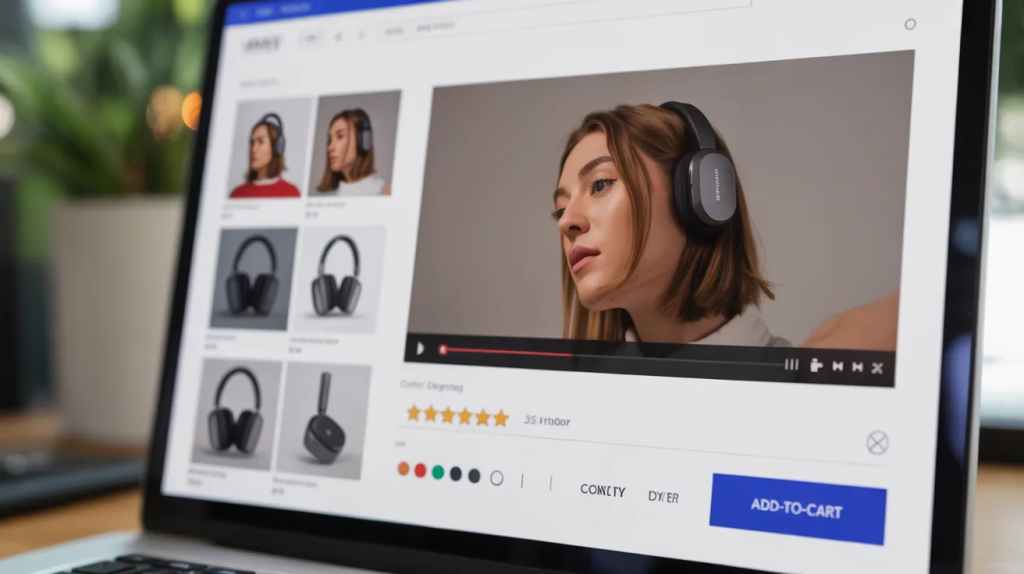
There are some product truths that still images struggle with.
Movement is one. Sequence is another. Ease of use is a big one.
That is why a good product demo video often outperforms a prettier but static visual set. It gives the shopper a feeling for the product in action. Not an abstract promise. A visible one.
For example, a kitchen tool is not just stainless steel with a nice grip. It is how quickly it works. A software-connected gadget is not just sleek. It is whether the setup looks annoying or simple. A fashion item is not just the fabric under studio lights. It is how it hangs, folds, stretches, and fits into real movement.
Shopify’s product video guidance is useful here because it treats video as a sales asset, not just a branding asset. The point is not simply to show the product from more angles. The point is to motivate purchase by making the product easier to understand and easier to trust.
The Best Product Pages Explain Without Overexplaining
This is where a lot of brands blow it.
They either give you nothing but glossy media and vague copy, or they flood the page with so much information that the buyer starts skimming and misses the point.
Video gives you a cleaner middle ground. One tight clip can explain what three image captions and two paragraphs were trying to do badly. It can also carry emotional weight better than text. Tone, pacing, emphasis, reaction, context. All of that helps.
This is one reason product video marketing has become more performance-focused in recent years. The conversation is no longer just “Should our brand use more video?” It is “Where does video reduce friction and help buyers move?”
HubSpot’s current coverage reflects that shift. Video in ecommerce is framed as a way to promote products, drive online sales, and engage buyers where they are already making decisions.
That does not mean every product page needs a mini-film. Some need a simple walkthrough. Some need a before-and-after. Some need a close-up use demo. Some need clean narration and screen support. Some are better served by motion graphics services that simplify the explanation rather than filming a literal demonstration.
The format depends on what the shopper still does not understand.
Video Helps Handle the Objections Photos Leave Behind
A shopper does not abandon a page just because the product looks bad. Most of the time, they leave because one or two doubts are still hanging around. Baymard’s product-page research shows that product pages are central to purchase decisions and that users repeatedly abandon sites because of product-page issues tied to layout, content types, or features.
That is exactly where a product detail page video can pull its weight. It gives the shopper a faster answer to the questions static images leave half-finished.
That is also why video tends to work best when it is built around hesitation, not aesthetics. If people are wondering how big the product feels, how it moves, what setup looks like, or whether it will actually solve the problem, the video should answer that and move on.
A strong product-page video works because it improves understanding at the exact point where the shopper is trying to make a decision.
Video Can Lower Returns by Setting Better Expectations
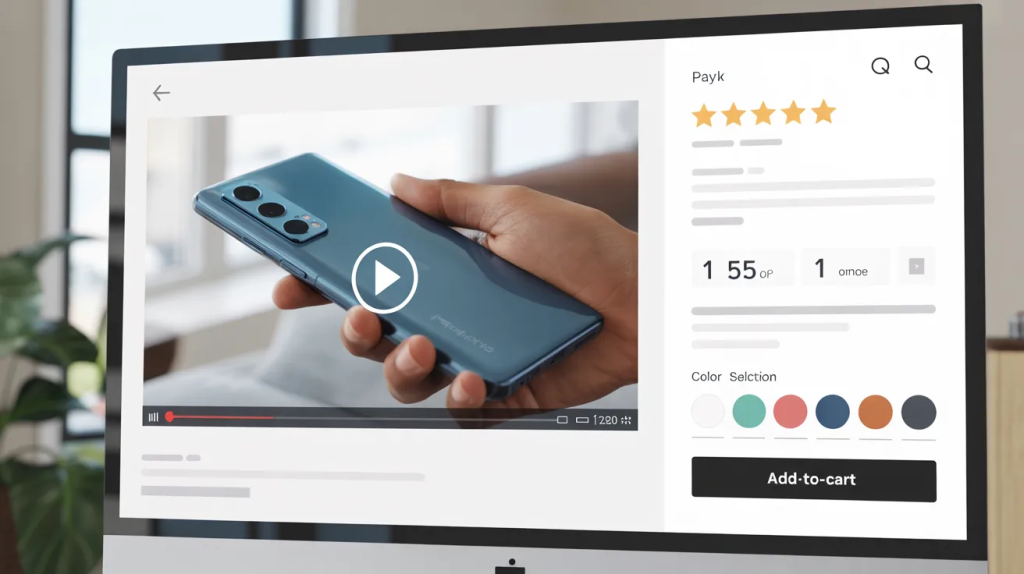
Returns often come from a gap between what the customer expected and what arrived. Shopify’s returns guidance frames returns as a major ecommerce cost center and a practical problem brands need to reduce, while HubSpot’s ecommerce video guidance points out that video helps consumers know what to expect before buying.
Put those together, and the logic is pretty straightforward: when the page gives people a more realistic sense of size, use, texture, motion, or setup, you cut down on avoidable surprise.
That is the real reason people say product videos reduce returns. Not because video is some magic conversion button, but because better expectation-setting usually leads to fewer disappointed buyers. This is especially true for products where movement, scale, installation, or real-life handling matter more than a polished hero shot.
A lot of brands miss this because they treat video like top-of-funnel content only. It is not. On the product page, it is closer to sales enablement. It helps the buyer check whether the product matches the promise. If your team sells visually simple but usage-heavy products, 2D explainer video services can work well here because they let you simplify steps, call out key benefits, and show a sequence without turning the page into a long technical lecture.
Trust Lands Harder When Real Customers Are on Camera
Most product pages try to prove trust with badges, star ratings, and short review snippets. Those still matter. But they are not always enough when the product is new, expensive, or a bit unfamiliar.
Shopify’s guidance on testimonials is built around the same idea: social proof helps increase sales and reduce uncertainty for online shoppers. A customer testimonial video for ecommerce goes one step further because it lets people watch with confidence instead of just reading it.
There is a big difference between “I liked it” in text and a customer showing how they use the product, what problem it fixed, and whether it held up after the first week. That kind of proof feels more grounded because tone, reaction, and context are harder to fake. It is also why pages that need a more premium or more tactile presentation sometimes benefit from 3D explainer video services, especially when the product’s value depends on detail, construction, layers, or movement that still images flatten out.
Shoppable Video Is Useful When It Removes Steps, Not When It Adds Noise
Some brands are now pushing shoppable product videos directly into ecommerce pages, and the idea itself makes sense.
Shopify’s shoppable-video guidance shows how merchants can turn video content into interactive shopping experiences with embedded purchasing paths inside the store environment. When used well, that shortens the distance between “I can see it” and “I can buy it.”
But this only works when the format matches the buying behavior. Not every product page needs an interactive layer. If the product is simple and the CTA is already clear, you do not need extra bells and whistles. The smarter use case is when video commerce removes friction for products that benefit from demonstration, creator-style walkthroughs, bundled styling, or a faster path from inspiration to checkout. Used badly, it clutters the page. Used well, it makes buying feel more natural.
Frequently Asked Questions
Final Words
If your product page only shows the item, it leaves too much work for the shopper. A well-placed video can explain use, reduce uncertainty, show proof, and make the buying decision feel less risky.
That matters because product pages sit right at the center of ecommerce decision-making, and shoppers already rely heavily on video when they research what to buy.”